Systemised Building Explained | Timber Frame Homes Highlands & Skye
What Does ‘Systemised Building’ Actually Mean — And Why It Matters for Timber Frame Homes in the Highlands
Building in the Highlands is rarely straightforward.
Access is often limited. Weather isn’t predictable. Ground conditions vary from one site to the next.
The challenge isn’t just designing a house. It’s delivering one—reliably—in conditions that don’t allow much margin for error.
This is where systemised building becomes important.
It’s a term that’s often used, but rarely explained clearly. Sometimes it’s taken to mean standardisation. Fixed designs. Limited flexibility.
In practice, it means something else.
In the context of timber frame homes in the Highlands, systemisation isn’t about repetition. It’s about structuring the process—so that each project can respond properly to its site, while still being delivered with clarity and control.
This reflects our experience working in the Highlands, where building conditions shape every stage of the process.
What is systemised building in construction?
Systemised building is a structured approach to how a house is designed, manufactured, and assembled.
Rather than treating each project as entirely bespoke—or entirely standard—it creates a framework that organises how the build comes together.
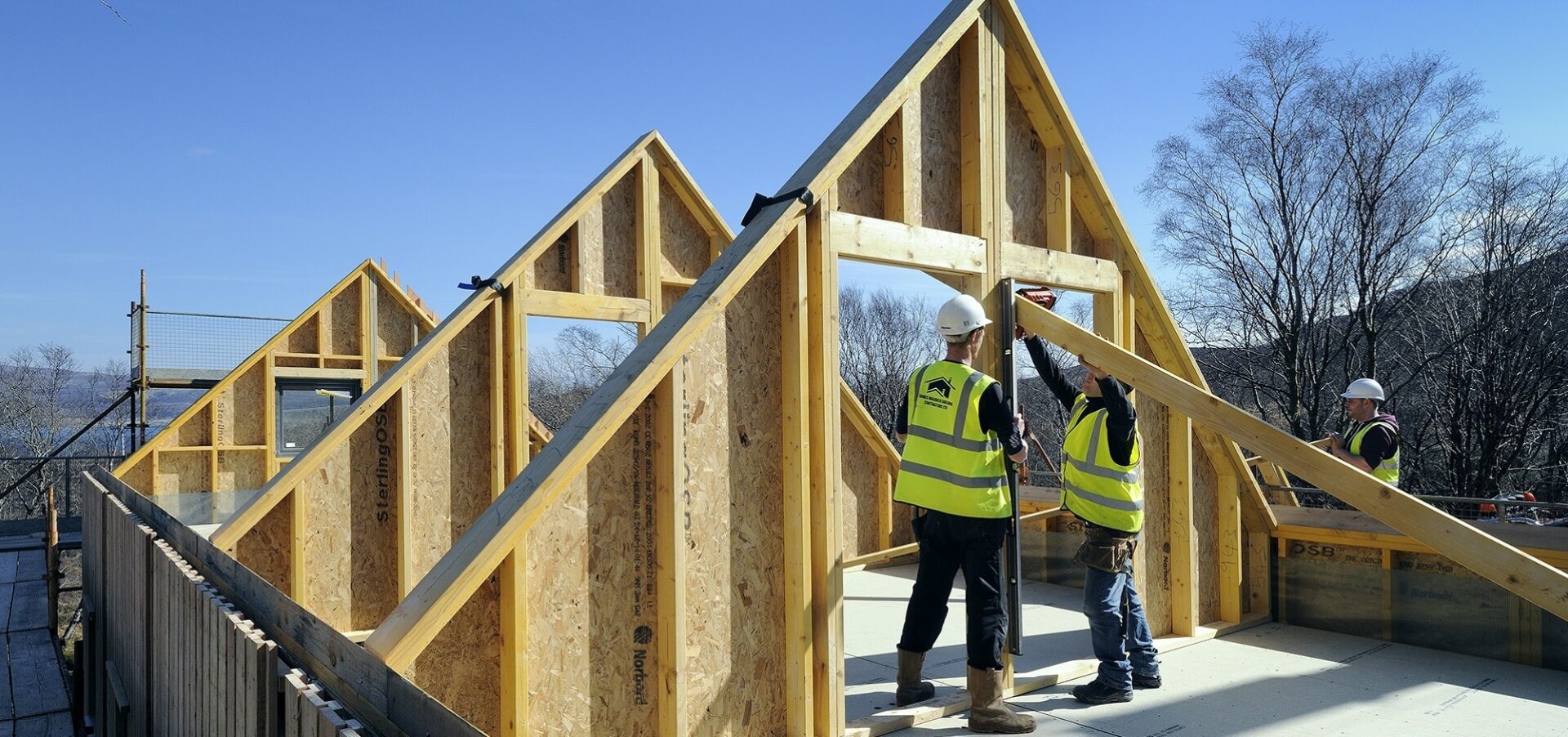
In practice, this often takes the form of panelised timber construction, where key structural elements are manufactured off-site and then assembled in a controlled sequence on site.
But the system goes beyond the panels themselves.
It includes:
-
coordination between design and build
-
consistent detailing and material choices
-
a defined sequence of works on site
-
alignment between manufacturing and site conditions
This integrated approach reflects an integrated design and build approach, where decisions made early in the process carry through to construction on site.
Why systemised building matters in the Highlands and on Skye
For those planning a self-build in the Highlands, the challenges are often site-specific.
Across Skye and the West Highlands, projects regularly involve:
-
limited or single-track access
-
exposure to wind and driving rain
-
remote sites with restricted contractor availability
-
complex ground conditions and infrastructure
Without a clear process, these variables can lead to delays, cost increases, and coordination issues.
A systemised approach—developed by an experienced builder in the Highlands—helps reduce that risk.
It’s less about efficiency in the abstract, and more about removing uncertainty from the process.
It allows for:
-
improved coordination between design and construction
-
reduced time spent on site
-
less exposure to weather during key build stages
-
more predictable timelines and outcomes
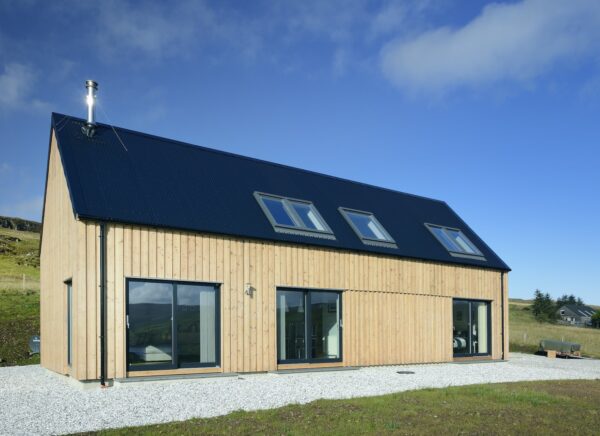
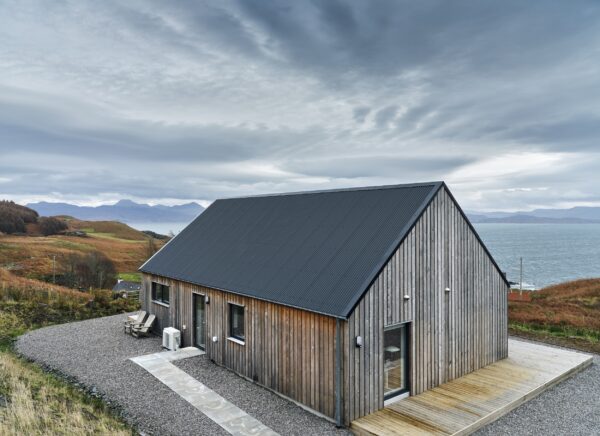
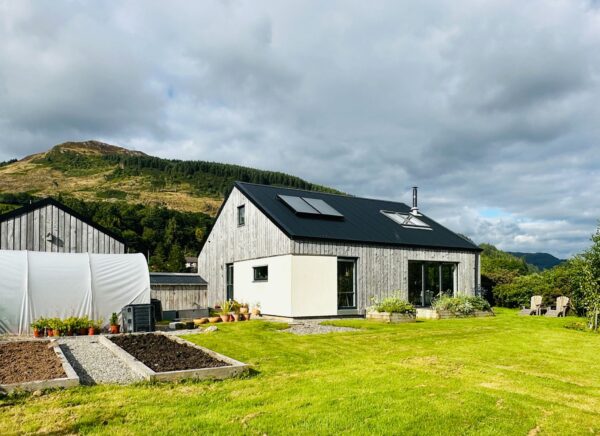
You can see this reflected in projects across Skye and the Highlands, where site conditions play a defining role in how each house is delivered.
Panelised timber construction — part of a wider system
Panelised timber construction is a key part of how many timber frame homes in Scotland are delivered.
For a house builder on Skye, this approach can:
-
reduce the number of deliveries to remote sites
-
shorten the time required on site
-
improve consistency in challenging weather conditions
Panels on their own don’t create a reliable build.
What matters is how they’re used—how design, manufacture and assembly are aligned from the outset.
In practice, this approach also supports how we approach sustainability and materials, particularly in reducing waste and improving build performance.
Systemisation vs standardisation
A common misconception is that a system leads to generic outcomes.
In reality, a well-developed system does the opposite.
It provides:
-
a consistent structural approach
-
known performance outcomes
-
a repeatable build sequence
Which allows the design to respond properly to:
-
orientation and views
-
landscape and topography
-
exposure to weather
-
planning constraints
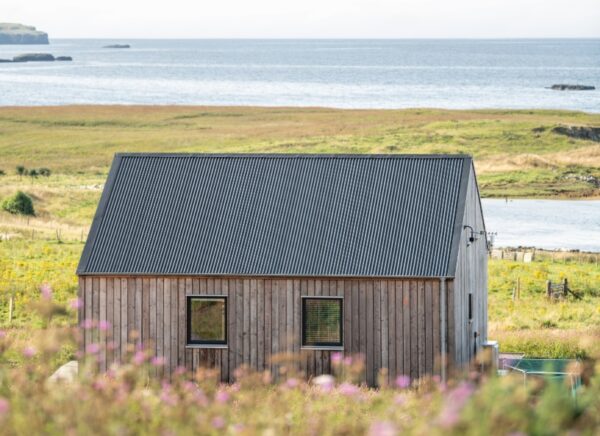
The result is a house that feels specific to its site—while still benefiting from a controlled and predictable build process.
What this means when choosing a builder in the Highlands
When selecting a builder in the Highlands or Isle of Skye, the process behind the build matters as much as the finished house.
A systemised approach typically leads to:
-
clearer communication from design through to construction
-
fewer unexpected changes during the build
-
improved cost certainty
-
greater confidence in delivery timelines
For clients working with a turnkey house builder in Scotland, this can significantly reduce the complexity of managing a rural self-build.
Looking at recent R.HOUSE projects can give a clearer sense of how this plays out in practice.
A more reliable way to build in rural Scotland
Efficiency is often framed in terms of speed.
In places like the Highlands, it’s more accurately defined by reliability.
Reducing unnecessary delays.
Avoiding rework.
Ensuring each stage of the build supports the next.
For a rural house builder in Scotland, systemisation provides a way to do that—while still allowing each project to respond to its surroundings.
Conclusion
Systemised building isn’t about standardising the outcome.
It’s about structuring the process.
In the Highlands—where conditions are variable, and often demanding—that structure allows projects to move forward with greater clarity. Fewer unknowns. Better coordination.
The result isn’t a generic house.
It’s one that feels properly resolved in relation to its site—because the process behind it has been considered from the beginning.
FAQ
What is systemised building?
Systemised building is a structured approach that connects design, manufacturing, and on-site construction into a coordinated process.
What is panelised timber construction?
Panelised timber construction involves manufacturing structural elements off-site and assembling them on site in a controlled sequence.
Are timber frame homes suitable for the Highlands?
Yes. Timber frame homes are well suited to the Highlands, particularly when combined with a systemised approach that accounts for weather, access, and site conditions.
Can you build a house on the Isle of Skye using a panelised system?
Yes. Panelised timber systems are often well suited to Skye, as they reduce time on site and improve coordination in remote locations.
OTHER NEWS ARTICLES


Are there any warranties available for prefabricated homes in the UK?
At R.HOUSE, we understand how important it is to feel secure in your decision. That’s why we’ve created this guide to help you understand the types of warranties available for prefabricated homes, their importance, and how to choose the right one for your needs.
How can I find an architect in Scotland experienced in designing timber houses?
Finding the right architect in Scotland to design your dream timber house can feel daunting. You want someone who not only shares your vision but also has the expertise to make it a reality, particularly in Scotland's remote areas.


What are the steps involved in building a timber house in Scotland?
Building a timber house in Scotland is an exciting journey that blends craftsmanship with sustainability. However, navigating the process can be daunting, especially if you're new to it. From securing permissions to managing construction phases, each step requires careful planning and coordination. Understanding these steps not only helps in setting realistic expectations but also ensures a smoother construction process.

What are the benefits of choosing modern prefabricated homes in Scotland?
Choosing the right home in Scotland—a land known for its rugged landscapes and welcoming communities—can often feel overwhelming.
The search for a home that blends comfort, affordability, and sustainability might seem impossible, but we've got the solution that ticks all these boxes: modern prefabricated homes, built by our in-house team, and designed to your specifications by our award-winning architects. We have it all under one roof.